From 'Do It For Me' to 'Do It With Me'
The cognitive-atrophy worry is real, but only if you let AI do it for you. Here's what changed when I asked it to do it with me instead.

We had an interesting conversation at work the other day about the long-term downsides of AI. Someone brought up the recent Anthropic paper on whether AI assistance is quietly atrophying our coding skills, and of course there's always the louder fear about AI taking our jobs.
I get the worry. But after several years of real use, I've come to a different conclusion: AI is the best teacher I've ever had, as long as you stop asking it to think for you.
Sometimes the right prompt really is "do it for me." But the prompt that has changed everything for me is "do it with me."
For context, I'm in the final stretch of my MS in Finance. The eight classes I've completed all run the same way: read a textbook, write papers, get a grade. No lectures. No live teaching. The format works for my schedule, but it's not the way I learn best, so I've leaned on AI to fill the gap.
One small habit that paid off: after I finish a chapter, I drop the source material into Google's Notebook LM and have it generate a podcast-style discussion. Two voices, casually working through the ideas. I listen on my commute and the chapter actually sticks.
Last week I went a step further. The assignment was to read a 60-page case study about a fictional family and explain what recent changes in their lives meant for their long-term financial plan. A few years ago, I would have built a spreadsheet. This time I asked an AI coding assistant to help me build a small custom dashboard for the analysis instead.
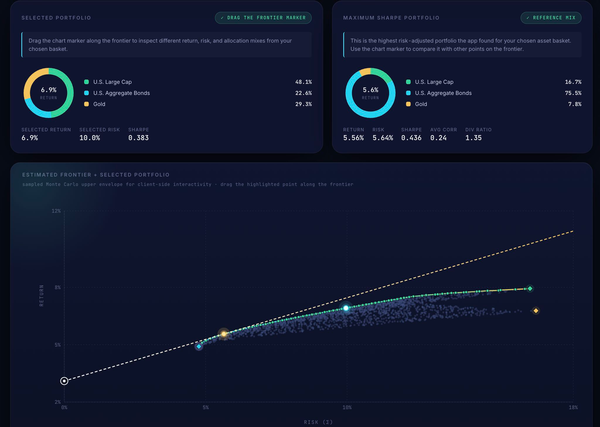
I want to be clear about what I asked it to do, and what I didn't. I didn't ask it to solve the case for me. I asked it to give me a better workspace to think in: sliders for assumptions, charts that updated as I changed inputs, a place to compare scenarios side by side. The wild part is that a custom, polished web app was actually faster than a spreadsheet would have been. That still feels like a sentence from the future.
But the dashboard wasn't the breakthrough. The breakthrough was the next prompt:
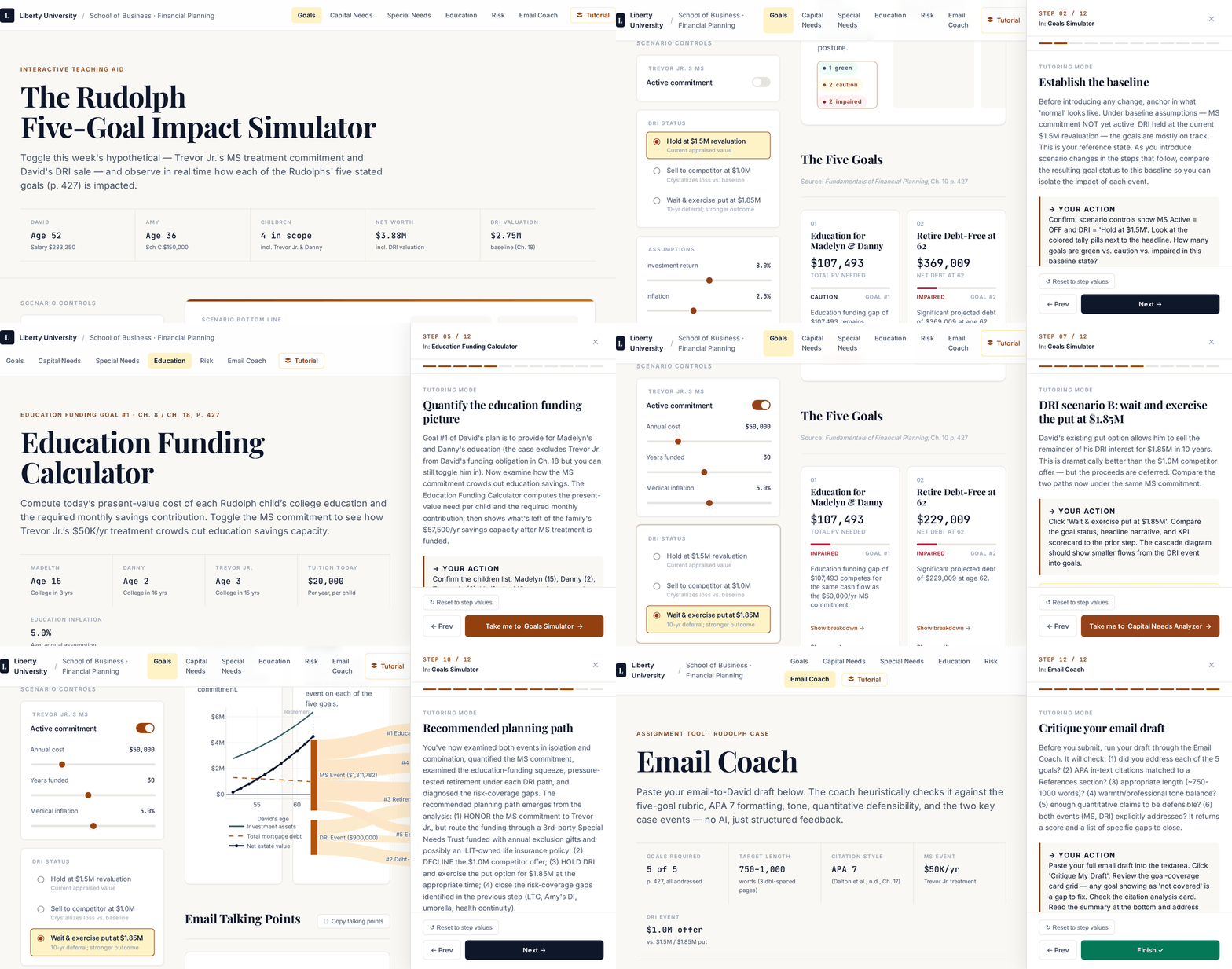
"Build an interactive tutorial mode that walks me through the process of how a financial planner would approach this case study."
The tutorial it produced does three things I didn't know I needed. It walks me through the dashboard one step at a time. It points me back to specific chapters of the textbook for additional reading and reflection. And at each step, it nudges me toward the higher-level thinking a planner would actually apply, not just the calculation.
It can't replace a live professor. But compared to reading a chapter alone and hoping the ideas land, it's closer to having a patient tutor sitting next to me.
Here's what I keep coming back to: the cognitive-atrophy worry is real, but it's a worry about how we use the tool. If you ask AI to do your thinking for you, of course your thinking gets weaker. If you ask it to teach alongside you, the opposite happens.
The opportunity is hiding in the prompt. Ask differently and you get a different relationship with the work.